



셀카로 간단하게 증명사진을 만들 수 있는 프롬프트입니다!
내 증명사진은 5년 전인데, 당장 공고 마감은 코앞이라 급하게 증명사진이 필요할 때! 딸깍하면 나오는 이력서용 증명사진 프롬프트입니다.
프롬프트는 사용하시는 AI툴에 이용하시면 됩니다. (재미나이, 지피티)
특히 셀카사진을 이용해 AI 증명사진을 만들 경우,
스튜디오 증명사진과 조명과 원근감의 차이가 발생해 어색해지는경우가 많은데, 해당부분을 최대한 보완한 프롬프트로 준비했습니다!
*실제로 이력서 증명사진의 경우 AI생성 사진을 금지해놓은 기업도 많기에 해당부분은 별도로 확인 필수
[ TIP ]
1. 이런 사진은 피해주세요
- 과한 필터의 사진
- 너무 가깝게 찍은 사진
2. 이런 사진이 결과물이 잘나옵니다
- 실제 얼굴과 비슷한 사진
- 필터가 적용되지 않거나 변형이 적은 사진
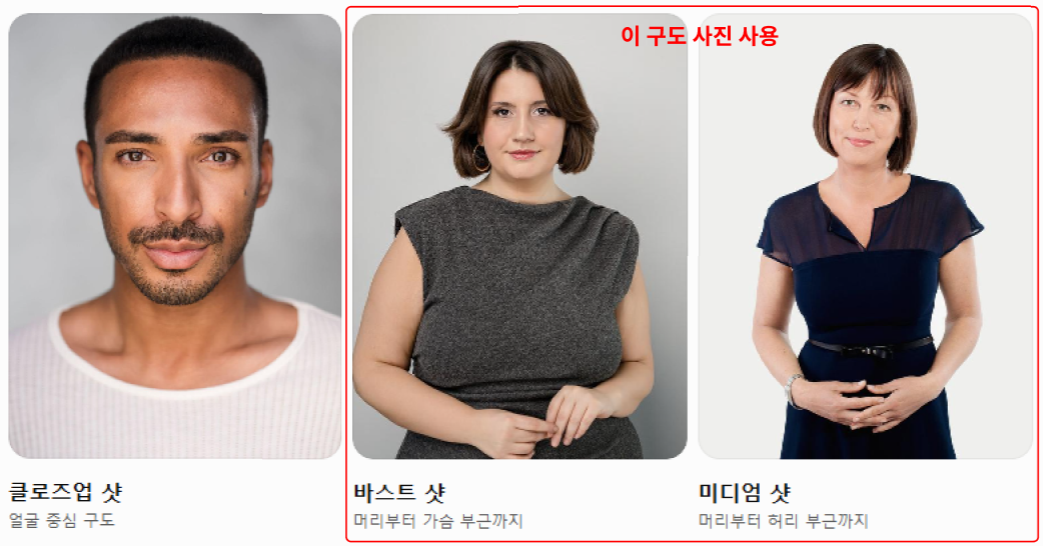
- 얼굴이 잘 보이는 바스트~미디엄샷 (너무 가깝게 찍지 않은 사진이면 됩니다!)
*너무 가까이서 찍힌 클로즈업샷은 피하는 게 좋아요
3. 사진 장수
- 3장 이상의 사진을 첨부하는 걸 권장합니다.
4. 결과물이 마음에 안 들 때
- 같은 대화창에서 사진 수정을 하는 것보다, 원하는 요구사항을 AI에게 다시 전달 후 프롬프트를 만들어 달라 한 후 보완한 프롬프트로 새로 요청을 하는 것이 결과물이 더 좋습니다.
만드는 방법
-
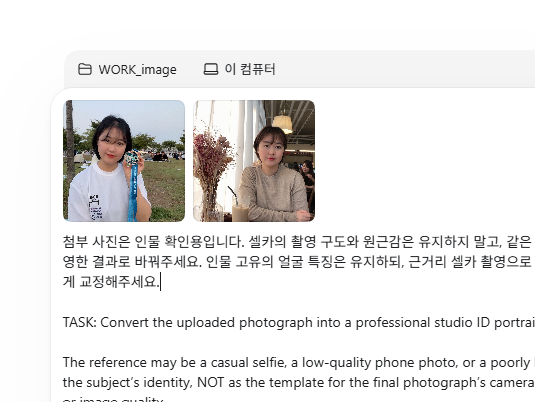
셀카를 준비해주세요
-
이 페이지 최하단 프롬프트를 복사한 후, 사진과 함께 사용하는 AI툴에 입력해주세요.
-
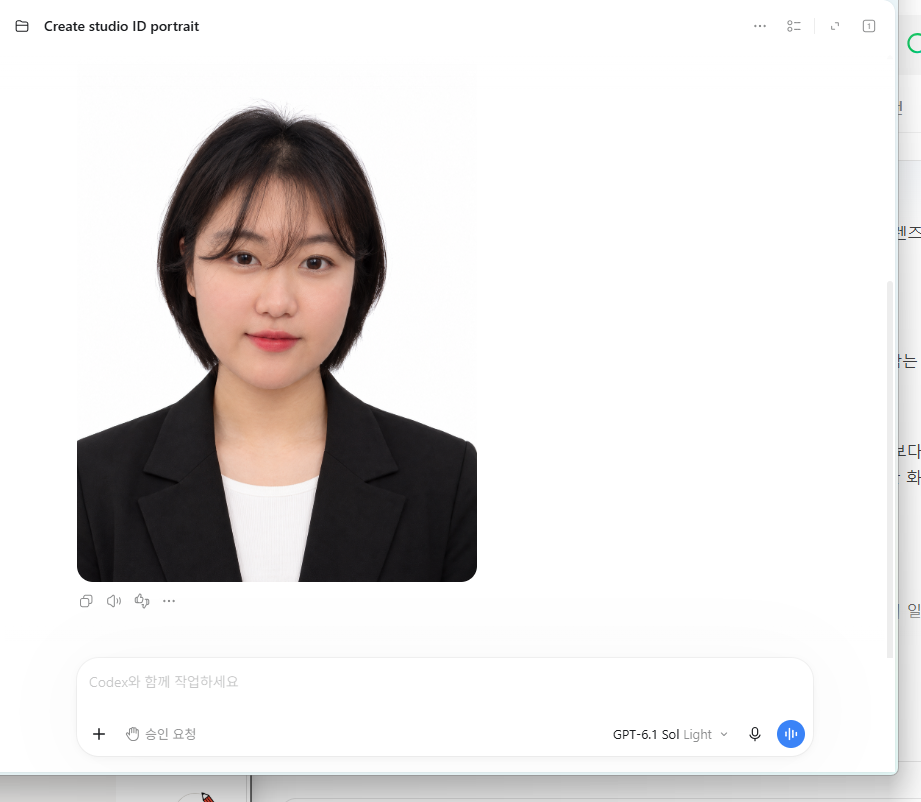
기다리면 끝
프롬프트
하단 프롬프트를 참고해 주세요! 복붙해서 사용하면 됩니다. (프롬프트가 기니 스압주의입니다..!)
프롬프트1 : 여자버전 프롬프트
| 첨부 사진은 인물 확인용입니다. 셀카의 촬영 구도와 원근감은 유지하지 말고, 같은 사람이 증명사진 스튜디오에서 새로 촬영한 결과로 바꿔주세요. 인물 고유의 얼굴 특징은 유지하되, 근거리 셀카 촬영으로 생긴 광각 왜곡과 원근 왜곡은 자연스럽게 교정해주세요. TASK: Convert the uploaded photograph into a professional studio ID portrait of the SAME WOMAN. The reference may be a casual selfie, a low-quality phone photo, or a poorly lit snapshot. Use it as the source of the subject’s identity, NOT as the template for the final photograph’s camera perspective, lighting, pose, framing, or image quality. The final image should look as though the same woman attended a professional ID photo studio and was photographed with a dedicated portrait camera. IDENTITY — HIGHEST PRIORITY Preserve the identity of the woman in the uploaded reference image(s). Do not generate a different person or substitute an idealized face. Preserve the subject’s recognizable facial characteristics: - Eye shape, eyelid structure, and natural eye spacing - Nose shape and distinctive nose features - Lip shape and thickness - Cheekbones, jawline, and chin - Overall facial proportions - Natural facial asymmetry - Apparent age and natural skin tone - Natural hairline and forehead shape - Distinctive permanent facial features visible in the reference Do not enlarge the eyes, slim the face, sharpen the jaw, reshape the nose, plump the lips, or apply beauty-standard facial corrections. Do not make the face younger or more model-like. Distinguish the person’s actual facial anatomy from distortion caused by the source photograph. Preserve the anatomy while correcting clearly identifiable selfie perspective and lens distortion. If a detail is unclear because of low resolution, restore it conservatively. Do not invent distinctive facial features or replace uncertain details with a generic attractive face. SELFIE-TO-STUDIO CONVERSION — ESSENTIAL Do not merely clean up the selfie, replace its background, or place studio clothing over the original selfie composition. Reconstruct the photographic presentation as a new studio ID portrait of the same person. Remove the visual characteristics of handheld phone photography: - Close-range wide-angle perspective - An enlarged-looking nose or central face caused by camera proximity - Foreshortening caused by high or low camera placement - Uneven apparent facial proportions caused by camera angle - Arm’s-length framing, raised shoulders, and selfie posture - Phone-camera HDR halos, oversharpening, and patchy noise reduction - Uneven household lighting, screen glow, and mixed color casts - Compression artifacts, sensor noise, and accidental motion blur Correct only distortions attributable to photography. Do not interpret this instruction as permission to redesign or beautify the face. The result must have the visual perspective, posture, lighting, and composition of a professionally captured studio ID photograph. POSE AND EXPRESSION Use a straight-on, eye-level camera position. The head and upper torso face directly toward the camera. Keep the head upright and centered, with no sideways tilt. Keep both shoulders level, relaxed, and facing forward. Eyes look directly into the lens. Use a calm, neutral expression. Lips are gently closed, without a smile or visible teeth. Preserve natural anatomical asymmetry. Do not artificially mirror the face or force perfect bilateral symmetry. CAMERA PERSPECTIVE AND COMPOSITION Simulate a dedicated portrait camera positioned at a normal studio portrait distance, approximately 1.5–2 meters from the subject, using an approximately 85–105 mm full-frame-equivalent portrait lens. The important visual result is natural facial perspective without close-range selfie distortion. Use a vertical ID portrait composition. Show the full head, neck, and upper shoulders. Leave a small, balanced margin above the hair. Keep the face centered and large enough for clear identification. Keep the camera level, with its optical axis near eye level. Keep the entire face in focus, including both eyes, nose, lips, and jaw. No overhead selfie angle. No low-angle phone perspective. No three-quarter view. No shallow-focus glamour portrait effect. No visible arms, hands, phone, or mirror. STUDIO LIGHTING AND BACKGROUND Use a controlled professional ID-photo studio setup: - Large, diffused frontal lighting - Balanced fill from both sides - Even exposure across the face - Soft, natural tonal transitions that retain facial dimension - Neutral white balance and realistic skin color - No harsh shadows beneath the eyes, nose, or chin - No strong highlights, oily glare, or blown-out skin Use a seamless, evenly lit pure white background (#FFFFFF). No visible background objects, texture, gradient, or cast shadow. Keep hair edges clean and natural, without cutout halos. CLOTHING Dress the subject in a well-fitted black blazer or dark formal jacket over a simple, clean, plain inner top with a modest neckline. Keep the neck, collar, and shoulders anatomically natural. Preserve the subject’s natural build. Do not narrow the shoulders, elongate the neck, or alter body proportions. The clothing must appear genuinely worn and photographed under the same lighting as the face. No visible jewelry or decorative accessories. HAIR Preserve the reference hairstyle, hair color, hairline, and natural hair density where practical. Neaten the existing hairstyle for a professional ID portrait. Keep the eyes and eyebrows clearly visible and the facial outline unobstructed. Hair may be arranged behind the shoulders or neatly tied back if needed. Preserve the existing part where practical. Do not impose a new haircut or a different hairline. Retain realistic individual hair strands and natural texture. Reduce distracting flyaways without creating unnaturally perfect hair edges. Do not add excessive volume or artificially increase hair density. SKIN AND MAKEUP Preserve the subject’s natural skin tone. Use restrained studio retouching appropriate for an ID portrait. Reduce photographic noise, compression artifacts, and distracting temporary blemishes while preserving recognizable facial details and natural skin texture. Keep subtle pores, natural lip texture, and gentle under-eye shading. Avoid both excessive smoothing and artificially exaggerated pores. No heavy whitening or artificial brightening. Use very minimal, natural-looking makeup. Preserve the natural eye shape, eyebrow shape, and lip outline. Lips may have a subtle, natural rosy tone, like a sheer non-glossy balm. Keep the original lip shape and thickness. Preserve natural lip texture and subtle creases. No heavy contouring, strong blush, false eyelashes, bold eyeliner, bold lipstick, lip liner, or glossy shine. No cosmetic reshaping or glamour retouching. FINAL IMAGE QUALITY Produce a clean, high-resolution, photorealistic studio ID portrait. Restore clarity conservatively from low-quality input. Use natural photographic sharpness, not aggressive digital sharpening. Maintain realistic texture without inventing unnecessary detail. The final photograph should feel evenly lit, carefully composed, and professionally captured. It should not retain the visual impression of a casual selfie with a white background. PRIORITY ORDER 1. Preserve the person’s identity. 2. Replace selfie capture characteristics with professional studio capture characteristics. 3. Achieve a neutral, front-facing ID portrait composition. 4. Refine clothing, hair, background, and image quality. When instructions conflict, identity preservation takes priority over beautification, perfect symmetry, or invented detail. AVOID Different identity, generic AI face, idealized beauty face, face reshaping, eye enlargement, jaw slimming, nose reshaping, lip enlargement, forced facial symmetry, age alteration, altered hairline, artificial hair density, elongated neck, selfie perspective, wide-angle distortion, arm’s-length framing, high camera angle, low camera angle, tilted head, turned shoulders, raised shoulder, visible phone, mirror selfie, casual snapshot lighting, phone HDR, oversharpening, compression artifacts, plastic skin, airbrushed skin, beauty filters, excessive whitening, invented skin texture, glamour retouching, heavy makeup, contouring, strong blush, false eyelashes, bold eyeliner, bold lipstick, lip liner, glossy lips, cinematic lighting, dramatic shadows, rim lighting, fashion styling, smiling, open mouth, visible teeth, jewelry, decorative accessories, background objects, textured background, gray background, gradient background, cutout halos, artificial hair edges, blurry facial features. |
프롬프트2 : 남자버전 프롬프트
| 첨부 사진은 인물 확인용입니다. 셀카의 촬영 구도와 원근감은 유지하지 말고, 같은 사람이 증명사진 스튜디오에서 새로 촬영한 결과로 바꿔주세요. 인물 고유의 얼굴 특징은 유지하되, 근거리 셀카 촬영으로 생긴 광각 왜곡과 원근 왜곡은 자연스럽게 교정해주세요. TASK: Convert the uploaded photograph into a professional studio ID portrait of the SAME MAN. The reference may be a casual selfie, a low-quality phone photo, or a poorly lit snapshot. Use it as the source of the subject’s identity, NOT as the template for the final photograph’s camera perspective, lighting, pose, framing, or image quality. The final image should look as though the same man attended a professional ID photo studio and was photographed with a dedicated portrait camera. IDENTITY — HIGHEST PRIORITY Preserve the identity of the man in the uploaded reference image(s). Do not generate a different person or substitute an idealized face. Preserve the subject’s recognizable facial characteristics: - Eye shape, eyelid structure, and natural eye spacing - Nose shape and distinctive nose features - Lip shape and thickness - Cheekbones, jawline, and chin - Overall facial proportions - Natural facial asymmetry - Apparent age and natural skin tone - Natural hairline and forehead shape - Distinctive permanent facial features visible in the reference Do not enlarge the eyes, slim the face, sharpen or widen the jaw, reshape the nose, plump the lips, or apply beauty-standard facial corrections. Do not make the face more masculine, younger, or more model-like. Distinguish the person’s actual facial anatomy from distortion caused by the source photograph. Preserve the anatomy while correcting clearly identifiable selfie perspective and lens distortion. If a detail is unclear because of low resolution, restore it conservatively. Do not invent distinctive facial features or replace uncertain details with a generic attractive face. SELFIE-TO-STUDIO CONVERSION — ESSENTIAL Do not merely clean up the selfie, replace its background, or place studio clothing over the original selfie composition. Reconstruct the photographic presentation as a new studio ID portrait of the same person. Remove the visual characteristics of handheld phone photography: - Close-range wide-angle perspective - An enlarged-looking nose or central face caused by camera proximity - Foreshortening caused by high or low camera placement - Uneven apparent facial proportions caused by camera angle - Arm’s-length framing, raised shoulders, and selfie posture - Phone-camera HDR halos, oversharpening, and patchy noise reduction - Uneven household lighting, screen glow, and mixed color casts - Compression artifacts, sensor noise, and accidental motion blur Correct only distortions attributable to photography. Do not interpret this instruction as permission to redesign or beautify the face. The result must have the visual perspective, posture, lighting, and composition of a professionally captured studio ID photograph. POSE AND EXPRESSION Use a straight-on, eye-level camera position. The head and upper torso face directly toward the camera. Keep the head upright and centered, with no sideways tilt. Keep both shoulders level, relaxed, and facing forward. Eyes look directly into the lens. Use a calm, neutral expression. Lips are gently closed, without a smile or visible teeth. Preserve natural anatomical asymmetry. Do not artificially mirror the face or force perfect bilateral symmetry. CAMERA PERSPECTIVE AND COMPOSITION Simulate a dedicated portrait camera positioned at a normal studio portrait distance, approximately 1.5–2 meters from the subject, using an approximately 85–105 mm full-frame-equivalent portrait lens. The important visual result is natural facial perspective without close-range selfie distortion. Use a vertical ID portrait composition. Show the full head, neck, and upper shoulders. Leave a small, balanced margin above the hair. Keep the face centered and large enough for clear identification. Keep the camera level, with its optical axis near eye level. Keep the entire face in focus, including both eyes, nose, lips, and jaw. No overhead selfie angle. No low-angle phone perspective. No three-quarter view. No shallow-focus glamour portrait effect. No visible arms, hands, phone, or mirror. STUDIO LIGHTING AND BACKGROUND Use a controlled professional ID-photo studio setup: - Large, diffused frontal lighting - Balanced fill from both sides - Even exposure across the face - Soft, natural tonal transitions that retain facial dimension - Neutral white balance and realistic skin color - No harsh shadows beneath the eyes, nose, or chin - No strong highlights, oily glare, or blown-out skin Use a seamless, evenly lit pure white background (#FFFFFF). No visible background objects, texture, gradient, or cast shadow. Keep hair edges clean and natural, without cutout halos. CLOTHING Dress the subject in a well-fitted dark navy or charcoal suit jacket over a clean, plain white dress shirt with a neat collar. Leave the top button naturally open, without a tie. Keep the neck, collar, and shoulders anatomically natural. Preserve the subject’s natural build. Do not broaden the shoulders, thicken the neck, or create an exaggerated V-shaped torso. The clothing must appear genuinely worn and photographed under the same lighting as the face. No visible jewelry or decorative accessories. HAIR AND FACIAL HAIR Preserve the reference hairstyle, hair color, hairline, and natural hair density. Neaten the existing hairstyle for a professional ID portrait. Keep the eyes and eyebrows clearly visible. Preserve the existing part where practical. Do not impose a new haircut or a different hairline. Retain realistic individual hair strands and natural texture. Reduce distracting flyaways without creating unnaturally perfect hair edges. Do not add excessive volume, fill in a receding hairline, conceal natural thinning, or artificially increase hair density. Preserve the facial-hair state shown in the reference: - If clean-shaven, keep the face clean-shaven. - If stubble, a mustache, or a beard is present, preserve its recognizable pattern and density while keeping it tidy. - Do not add or remove facial hair by default. - Do not mistake natural beard shadow for photographic noise or skin discoloration. SKIN AND GROOMING Preserve the subject’s natural skin tone. Use restrained studio retouching appropriate for an ID portrait. Reduce photographic noise, compression artifacts, and distracting temporary blemishes while preserving recognizable facial details and natural skin texture. Keep subtle pores, natural lip texture, gentle under-eye shading, and any natural beard shadow. Avoid both excessive smoothing and artificially exaggerated pores. No heavy whitening or artificial brightening. Preserve the subject’s existing makeup or makeup-free appearance. Do not add visible makeup if none is present in the reference. Keep the lips’ natural color, shape, and texture. No added lip tint, lipstick, eyeliner, blush, contouring, artificial eyelash enhancement, or cosmetic eyebrow reshaping. Do not darken or thicken the eyebrows beyond their natural appearance. No airbrushing, beauty-filter finish, or glamour retouching. FINAL IMAGE QUALITY Produce a clean, high-resolution, photorealistic studio ID portrait. Restore clarity conservatively from low-quality input. Use natural photographic sharpness, not aggressive digital sharpening. Maintain realistic texture without inventing unnecessary detail. The final photograph should feel evenly lit, carefully composed, and professionally captured. It should not retain the visual impression of a casual selfie with a white background. PRIORITY ORDER 1. Preserve the person’s identity. 2. Replace selfie capture characteristics with professional studio capture characteristics. 3. Achieve a neutral, front-facing ID portrait composition. 4. Refine clothing, hair, background, and image quality. When instructions conflict, identity preservation takes priority over beautification, perfect symmetry, or invented detail. AVOID Different identity, generic AI face, idealized male model face, face reshaping, eye enlargement, jaw slimming, exaggerated square jaw, nose reshaping, lip enlargement, forced facial symmetry, age alteration, artificially masculine features, broadened shoulders, thickened neck, altered hairline, artificial hair density, added or removed facial hair, selfie perspective, wide-angle distortion, arm’s-length framing, high camera angle, low camera angle, tilted head, turned shoulders, raised shoulder, visible phone, mirror selfie, casual snapshot lighting, phone HDR, oversharpening, compression artifacts, plastic skin, airbrushed skin, beauty filters, excessive whitening, invented skin texture, glamour retouching, added makeup, tinted lips, glossy lips, heavily reshaped eyebrows, cinematic lighting, dramatic shadows, rim lighting, fashion styling, smiling, open mouth, visible teeth, jewelry, decorative accessories, background objects, textured background, gray background, gradient background, cutout halos, artificial hair edges, blurry facial features. |
앞으로 더 재밌고 유용한 정보 많이 올릴테니 많이들 들려주세요!
다나와 매거진 인스타그램 계정 바로가기 →